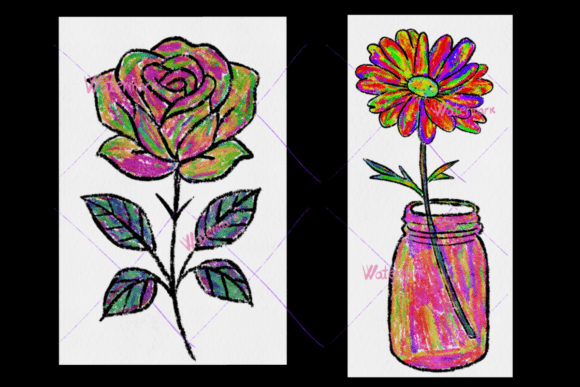
Rose and Jar with Flower Colorfulcharcoa: A Guide to Textured Digital Art Assets
In the evolving landscape of digital design, the line between traditional media and digital creation continues to blur. For creators seeking authenticity in their visual projects, finding assets that retain the tactile imperfections of physical art is often a challenge. The Rose and Jar with Flower Colorfulcharcoa collection addresses this specific need by offering high-resolution digital illustrations that prioritize organic texture over sterile perfection. These assets are not merely clipart; they are digital reproductions of an intuitive artistic process, designed to bring warmth and emotional resonance to modern layouts.
Understanding the nature of these files is essential for integrating them effectively into your workflow. Unlike standard vector graphics or flat PNGs, this collection embraces the grain of paper and the smudge of charcoal. This article explores the characteristics, applications, and practical considerations of using these textured art assets, ensuring you can leverage their unique aesthetic qualities while managing technical expectations regarding transparency and resolution.
The Artistic Process Behind the Asset
To fully appreciate the utility of the Rose and Jar with Flower Colorfulcharcoa designs, one must understand their origin. These original illustrations were created from scratch using black charcoal outlines and custom multicolor charcoal brushes. This distinction is vital because it informs the visual weight and edge quality of the artwork. Rather than relying on pre-made stamps or filters, the linework possesses the variable pressure and drag associated with physical drawing tools.
The color application further separates this collection from conventional digital floral art. The bold, expressive color palette was chosen intuitively in Procreate, allowing movement and emotion to guide the piece rather than realism. In a market saturated with botanically accurate but emotionally flat vector flowers, this approach offers a refreshing alternative. The colors serve the mood of the composition first, making these assets particularly suitable for projects where feeling and atmosphere take precedence over scientific accuracy. When evaluating whether this style suits your brand or personal project, consider if your audience responds better to polished precision or expressive, hand-crafted warmth.
Technical Specifications and File Details
Practical application requires precise technical knowledge. This collection includes two distinct high-quality PNG files, each optimized for different spatial requirements within a layout:
- Rose Illustration: 2200 x 3400 pixels. This vertical orientation is ideal for poster designs, book covers, or tall social media stories.
- Jar with Flowers: 1400 x 3200 pixels. While slightly narrower, this file maintains significant height, perfect for sidebar accents, packaging labels, or vertical web banners.
Both files are rendered at a resolution sufficient for professional printing and high-definition screen display. However, the most critical technical detail concerns the background. Attention: these files do not have a transparent background. Instead, the designs feature a textured paper background for a realistic feeling. This is a deliberate artistic choice, not a limitation. The paper grain interacts with the charcoal strokes, providing depth that a transparent background would eliminate. Users must plan their layering strategies accordingly, treating these images as foundational elements or framed compositions rather than floating stickers.
Ideal Applications for Textured Charcoal Art
The versatility of the Rose and Jar with Flower Colorfulcharcoa assets lies in their ability to soften rigid digital layouts. Because they carry the visual language of traditional fine art, they bridge the gap between commercial design and gallery aesthetics. Below are several scenarios where these specific characteristics provide tangible value.
Stationery and Paper Goods
For designers creating wedding invitations, greeting cards, or journal covers, the textured paper background is a feature, not a bug. It mimics the look of premium cardstock without requiring expensive specialty printing. The charcoal texture adds a sensory dimension that flat ink cannot achieve. When used in stationery, the rose and jar motifs evoke nostalgia and romance, aligning perfectly with the sentimental nature of paper goods.
Wall Art and Home Decor
With resolutions exceeding 2000 pixels on the shortest side, these files are well-suited for wall art. The expressive, non-realistic color palette allows the art to function as an accent piece that ties together eclectic interior design schemes. Because the artwork was guided by emotion rather than botanical correctness, it avoids looking like a textbook illustration, making it more appropriate for decorative framing. Designers can utilize the existing paper texture as a matte border effect when printing, reducing the need for additional framing mats.
Digital Content and Social Media
In the realm of digital content, texture stops the scroll. Clean, minimalist feeds are common, but they can also be forgettable. Introducing the gritty, vibrant aesthetic of colorful charcoal creates immediate visual contrast. Bloggers, influencers, and small business owners can use these assets as header images, Pinterest pins, or story backgrounds. The key here is the "handmade" signal; in an era of AI-generated imagery, visible brushwork and paper grain communicate human effort and authenticity, fostering deeper engagement with audiences who value craftsmanship.
Navigating Limitations and Design Considerations
While the Rose and Jar with Flower Colorfulcharcoa collection offers distinct advantages, it is not universally applicable. Understanding its limitations prevents frustration during the design process. The primary consideration remains the lack of transparency. If your project requires placing a flower directly over a complex photograph or a dark gradient background, these files will require additional editing.
Designers comfortable with masking tools in Photoshop or Procreate can extract the subject, though doing so may result in the loss of the delicate charcoal edges that blend into the paper texture. For many users, preserving the integrity of the original scan is preferable. Therefore, these assets work best in layouts where white or cream space is abundant, or where the paper texture serves as the unifying background element across multiple design components.
Additionally, the intuitive color palette means these illustrations may not match strict corporate brand guidelines. The colors were selected for emotional impact, not Pantone matching. Businesses with rigid visual identities should test these assets in context before committing. However, for brands aiming to pivot toward a more organic, artisanal, or human-centric identity, this deviation from standard color theory is exactly what makes the asset valuable.
Evaluating Suitability for Your Project
Before incorporating these assets, ask yourself the following questions to determine fit:
- Does my project benefit from imperfection? If you need clinical precision, look elsewhere. If you need soul and texture, proceed.
- Can I accommodate a non-transparent background? Review your layout grid. Is there dedicated space for a rectangular art element?
- Is the resolution sufficient for my output size? Calculate your DPI requirements. At 300 DPI, the rose file prints clearly up to approximately 7x11 inches.
- Does the emotional tone align with my message? The bold, expressive colors convey energy and sentiment. Ensure this matches your copy and overall branding voice.
Maximizing the Value of Hand-Drawn Digital Assets
The true value of the Rose and Jar with Flower Colorfulcharcoa collection extends beyond the pixels themselves. It represents a shift toward hybrid workflows where digital convenience meets analog soul. By choosing assets created with custom brushes and intuitive coloring, you are investing in a specific aesthetic narrative. You are telling your audience that the project was touched by human hands, even if delivered through digital screens.
When using these files, resist the urge to over-process them. Avoid heavy sharpening or aggressive color correction, as this destroys the subtle paper grain and charcoal bleed that define the style. Instead, let the texture breathe. Use blending modes like Multiply or Overlay if you must integrate them into colored backgrounds, but always check the result to ensure the paper texture enhances rather than muddies the underlying design.
Ultimately, these illustrations serve as a reminder that in a world of infinite digital reproducibility, texture and expression remain premium commodities. Whether used for personal crafts, professional packaging, or evocative wall art, the Rose and Jar with Flower Colorfulcharcoa assets provide a tangible connection to the artistic process, grounding digital creations in the rich, imperfect reality of traditional media. By respecting the unique characteristics of these files—their texture, their bold colors, and their hand-drawn origins—creators can produce work that feels both timeless and genuinely alive.