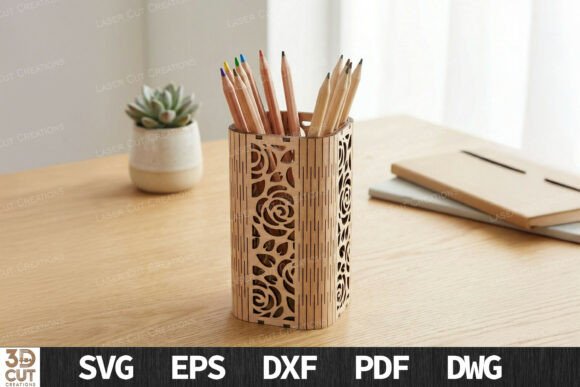
Floral Rose Wood Pen Holder SVG: A Practical Guide to Laser Cut Desk Organization
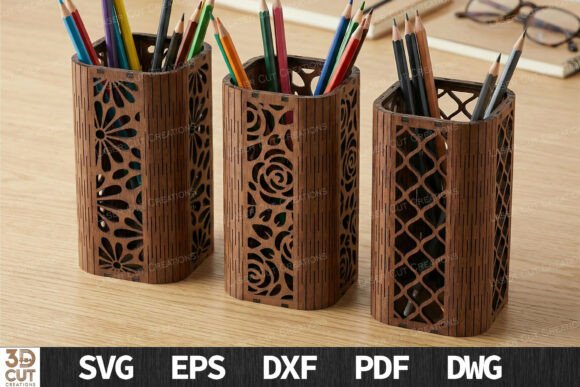
Transforming a cluttered workspace into an organized sanctuary often starts with the right storage solutions. The Floral Rose Wood Pen Holder SVG bundle offers more than just a place to stash writing instruments; it provides a pathway to creating professional-grade desk accessories that balance aesthetic appeal with structural integrity. This specific digital design package includes three distinct patterns—a floral flower cutout, an elegant rose design, and a modern geometric lattice—all engineered for 3mm plywood, MDF, or wood sheets. While the visual promise of these laser-cut organizers is high, achieving a flawless final product requires understanding the technical nuances of vector files and material behavior.
Many makers and small business owners download SVG files expecting instant perfection, only to encounter fitment issues or assembly failures. These setbacks rarely stem from poor design intent but rather from overlooked variables in the production process. By addressing common pitfalls before you hit "start" on your laser cutter, you can ensure that your pen holders are not only beautiful but also durable enough for daily use or retail sale.
Understanding Material Thickness Tolerances
The most frequent error when working with slot-and-tab structures like those in this bundle is assuming that "3mm plywood" is exactly 3.00mm thick. In reality, manufacturing tolerances mean your sheet stock could range from 2.7mm to 3.2mm. If you cut the Floral Rose Wood Pen Holder SVG using default settings without testing, a 0.3mm discrepancy can result in joints that are either impossibly tight or frustratingly loose.
Why this matters: Loose tabs compromise the structural stability of the organizer, causing it to wobble or fall apart when loaded with heavy markers or brushes. Conversely, overly tight slots can cause the wood to crack during assembly or create burn marks from excessive friction.
Better Approach: Always perform a calibration test cut using a small section of the tab-and-slot geometry before cutting the full design. Measure your actual material thickness with digital calipers. Most laser software allows you to adjust line offsets or kerf compensation. If your material is thinner than specified, reduce the slot width slightly; if thicker, increase it. This five-minute step prevents wasted material and ensures a satisfying snap-fit assembly.
Evaluating Vector File Quality and Compatibility
Not all SVG files are created equal, even when they come in a comprehensive bundle including DXF, EPS, PDF, and DWG formats. A common misunderstanding is that any vector file will automatically translate to a clean cut. However, some files contain overlapping lines, open paths, or raster elements disguised as vectors. These hidden flaws can cause the laser head to double-back over the same line, resulting in charred edges and extended cut times.
Before committing to a full production run for craft fairs or client orders, open the files in your preferred vector editing software. Check for:
- Closed Paths: Ensure all cut lines form complete shapes. Open paths can lead to incomplete cuts where pieces remain attached to the main sheet.
- Duplicate Lines: Select all and check for stacked vectors. Deleting duplicates improves edge quality and reduces machine wear.
- Node Count: Excessively complex curves with thousands of nodes can stutter older laser controllers. Simplifying splines maintains smooth motion and cleaner arcs on the floral and rose designs.
Verifying file integrity takes minutes but saves hours of post-processing sanding and cleaning. Clean vector files should be ready to resize without distortion, allowing you to adapt the pen holder dimensions for different markets or personal preferences.
Design Selection Based on End Use
This bundle features three unique patterns, and choosing the wrong one for your specific application is a subtle but impactful mistake. The intricate floral flower cutout and elegant rose design are visually stunning but have more internal surface area and delicate bridges compared to the modern geometric lattice. Using a highly detailed organic pattern for a utility-heavy environment, such as a workshop or classroom, may lead to faster accumulation of dust and debris in the crevices.
Conversely, the geometric lattice offers superior strength and easier maintenance, making it ideal for high-traffic areas or products intended for children. Reserve the ornate floral and rose variants for home office decor, study table accessories, or premium handmade gifts where aesthetics take precedence over rugged utility. Matching the design complexity to the user’s lifestyle ensures long-term satisfaction and reduces returns or complaints if you are selling these items.
Optimizing Assembly and Finishing Workflows
Even with perfect cuts, poor assembly techniques can ruin the presentation of your desk organizers. A frequent oversight is applying glue before dry-fitting the entire structure. With slot-and-tab designs, forcing a misaligned piece can warp the entire cylinder or box shape. Additionally, failing to manage squeeze-out during gluing results in dried adhesive residue that interferes with staining or painting later.
Practical Advice:
- Dry Fit First: Assemble the holder without glue to verify alignment and identify any tight spots that need light sanding.
- Use Jigs or Bands: For cylindrical or curved variations, use rubber bands or a simple strap clamp to maintain even pressure while the adhesive cures. This prevents ovalization.
- Protect Interior Surfaces: Apply painter’s tape to interior tabs before gluing to catch excess adhesive, or wipe squeeze-out immediately with a damp cloth. Once cured, glue blocks stain penetration, leaving unsightly light patches on finished wood.
For those selling at craft fairs or online, consistency is key. Create a simple assembly jig or workflow checklist. This standardization ensures that every Floral Rose Wood Pen Holder you produce meets the same quality benchmark, reinforcing your brand’s reputation for craftsmanship.
Commercial Considerations for Makers and Entrepreneurs
If you intend to sell these desk organizers, overlooking licensing and market positioning can undermine your business. Always verify the commercial usage rights associated with the SVG bundle. While many designers allow physical product sales, some restrict mass production or require attribution. Respecting these terms protects you from legal issues and supports the creator ecosystem.
Furthermore, avoid competing solely on price. Laser-cut wood products are abundant. Instead, leverage the versatility of this bundle to create value-added offerings. Bundle the pen holder with matching coasters, offer custom engraving services using the blank spaces in the geometric design, or package it as part of a complete desk set. Highlighting the "handmade" and "locally crafted" aspects resonates with buyers seeking meaningful office accessories rather than generic plastic alternatives.
Ultimately, success with the Floral Rose Wood Pen Holder SVG lies in treating the digital file as a starting point, not a finish line. By respecting material realities, verifying technical specifications, selecting appropriate designs for specific users, and refining your assembly process, you transform simple plywood sheets into functional art. Whether you are organizing your own creative space or building a product line, these mindful adjustments bridge the gap between amateur attempts and professional results.