Evaluating the Artist Painter Clipart Collection for Professional Design
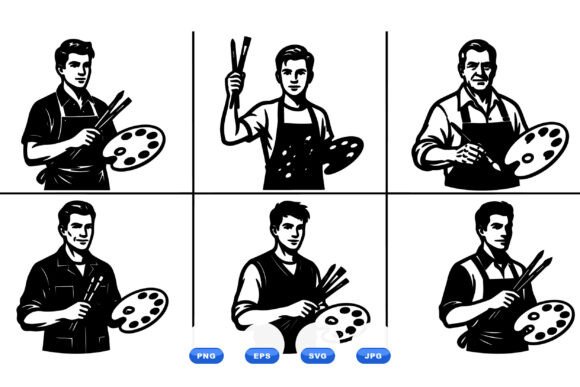
In the landscape of digital asset acquisition, finding illustration packs that balance specific aesthetic appeal with genuine technical utility is a frequent challenge for designers and content creators. The Artist Painter Clipart Collection addresses this niche by offering a curated set of retro woodcut vectors featuring six male painter portraits. Unlike generic clipart libraries that often suffer from inconsistent styling or poor vector construction, this collection focuses on a cohesive, high-contrast visual language suitable for editorial, branding, and educational contexts. For professionals aged 20 to 50 who manage their own creative workflows, understanding the practical application and technical specifications of such assets is essential before integrating them into commercial projects.
Aesthetic Cohesion and Retro Woodcut Styling
The primary value proposition of this collection lies in its distinct artistic direction. The retro woodcut style is not merely a filter applied to modern photography; it mimics the deliberate line work and negative space utilization found in traditional printmaking. This results in bold, high-contrast artwork that performs exceptionally well in both digital and physical media. High contrast is a functional necessity in graphic design, ensuring legibility when images are scaled down for web icons or reproduced in single-color print environments where subtle gradients would be lost.
The collection features six male painters holding palettes and brushes in varied poses. This variation is critical for layout flexibility. A common failure point in themed clipart sets is repetitive body language, which makes using multiple assets on the same page look artificial. By providing distinct postures, the Artist Painter Clipart Collection allows for dynamic composition in newsletters, workshop flyers, or art history presentations without visual redundancy. The clean black-and-white palette further enhances versatility, allowing these illustrations to serve as neutral anchors in colorful layouts or as standalone elements in minimalist monochromatic designs.
Technical Specifications and File Format Utility
For professional users, the file format dictates the workflow more than the image itself. This collection is delivered as an instant download ZIP containing SVG, EPS, PNG, and JPG files. Understanding the hierarchy of these formats is key to maximizing the asset's lifespan.
- SVG and EPS: These are the primary working files. Being fully scalable vectors, they allow for infinite resizing without pixelation. More importantly, true vector construction means individual paths can be edited in software like Adobe Illustrator or Affinity Designer. If a designer needs to change the color of a brush handle or adjust the opacity of the palette to match a brand guideline, these formats make that possible. The claim of "100 vector" compatibility suggests robust node structure rather than auto-traced raster artifacts.
- PNG with Transparent Background: This format serves as the bridge between vector editing and rapid deployment. For marketers or bloggers using platforms like Canva, WordPress, or Squarespace who may not have vector editing capabilities, the transparent PNG provides immediate usability. The transparency must be clean, without jagged edges or residual white halos, to ensure professional integration over colored backgrounds.
- JPG: While less flexible due to the lack of transparency and raster nature, JPGs remain useful for low-fidelity mockups, internal documentation, or legacy systems that do not support alpha channels.
The inclusion of all four formats eliminates the need for conversion tools, saving time and reducing the risk of quality degradation during export. For freelancers managing tight deadlines, having production-ready assets across multiple standards streamlines the delivery process significantly.
Practical Applications in Editorial and Branding
The specific subject matter—male painters with traditional tools—positions this collection strongly within arts education, cultural institutions, and creative coaching niches. However, its utility extends beyond literal representation. In branding, the woodcut aesthetic conveys craftsmanship, heritage, and authenticity. A boutique frame shop, an artisanal paint manufacturer, or a vintage clothing retailer could utilize these portraits to evoke a sense of established quality without commissioning custom illustration.
In editorial contexts, such as blog posts about art techniques or museum exhibition guides, these images function as effective visual breaks. Text-heavy content regarding art history or technical painting methods benefits from relevant imagery that reinforces the topic without distracting from the narrative. Because the style is illustrative rather than photographic, it avoids the uncanny valley effect often associated with stock photos of models pretending to paint. The stylized nature signals to the reader that the image is decorative or symbolic, maintaining the integrity of the informational content.
For educators and course creators, consistency in visual aids improves learning retention. Using a unified set of characters across slide decks, worksheets, and certificates creates a branded learning environment. The six distinct poses provide enough variety to represent different modules or lessons while maintaining a recognizable visual thread throughout the curriculum.
Assessing Quality and Workflow Integration
When evaluating the Artist Painter Clipart Collection against free alternatives or broader subscription services, several quality indicators stand out. Free resources often lack proper layer organization or contain open paths that cause issues during printing. A dedicated commercial pack typically undergoes stricter quality control regarding anchor point optimization and color separation. For print projects, specifically screen printing or risograph, clean black-and-white vectors are mandatory. Complex shading or grayscale values in other collections often require expensive halftone processing, whereas this high-contrast approach is press-ready by default.
However, potential users should be aware of inherent limitations. The collection is stylistically specific; it will not suit modern tech startups, corporate finance, or futuristic themes. Attempting to force this retro aesthetic into incompatible branding can create cognitive dissonance. Additionally, the representation is limited to male figures. Projects requiring diverse gender representation would need to supplement this pack with additional assets, potentially introducing stylistic inconsistency. Professionals must weigh whether the specific mood of this collection aligns with their long-term brand identity or if it is merely a temporary solution for a single campaign.
Value Proposition for Independent Creators
For the target demographic of freelancers, small business owners, and serious hobbyists, the economic calculation differs from enterprise buyers. Commissioning a custom illustrator to create six cohesive woodcut portraits would likely cost hundreds of dollars and take weeks. Even premium stock subscriptions accumulate monthly costs that may exceed the price of a perpetual license for a specialized pack. Owning the files outright via an instant download model provides long-term value, particularly for evergreen content that remains in use for years.
The "Instant Download" aspect also caters to the agile nature of modern digital work. There is no waiting for approval or licensing negotiations. This immediacy supports iterative design processes where testing multiple visual directions is necessary. Whether creating a last-minute social media graphic or finalizing a print brochure, having immediate access to high-quality, editable vectors reduces friction in the creative pipeline.
Making an Informed Selection
The Artist Painter Clipart Collection represents a specialized tool rather than a general-purpose library. Its strength is its focus: a consistent, high-contrast, retro woodcut aesthetic delivered in industry-standard vector formats. It excels in scenarios demanding artistic credibility and technical scalability, particularly within the arts, education, and heritage sectors. For professionals who prioritize clean line work and editability over photographic realism, this collection offers a reliable foundation for visual communication.
Before purchasing, users should verify that the specific poses and masculine representation align with their current project scope. They should also confirm their software compatibility with SVG/EPS files if they intend to modify the artwork. When used within its intended context, this collection provides a level of polish and coherence that elevates amateur designs to professional standards, justifying its place in a curated digital asset toolkit. Ultimately, the decision rests on whether the specific intersection of retro style and vector utility solves a tangible problem in your current or upcoming creative workload.