Evaluating Hand Drawn Construction Tools Clipart for Design Projects
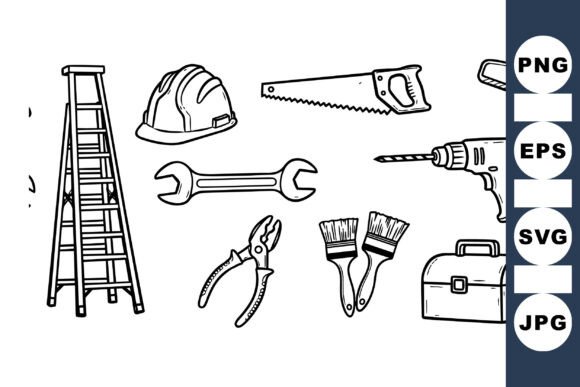
Selecting the right visual assets is a critical step in creating effective communication materials for the building, renovation, and maintenance industries. Hand drawn construction tools clipart offers a distinct aesthetic that differs significantly from standard stock photography or hyper-realistic 3D renders. This specific category of digital assets typically features simple black and white line drawings of essential equipment such as ladders, helmets, saws, wrenches, drills, pliers, brushes, and toolboxes. When evaluating whether this minimalist style aligns with a current project, it is necessary to understand the functional characteristics, technical specifications, and appropriate use cases associated with these vector-based illustrations.
Defining the Minimalist Line Art Aesthetic
Hand drawn construction tools clipart in this category is defined by its reductionist approach. Unlike detailed technical schematics or shaded artistic renderings, these assets rely on clean lines and negative space to convey meaning. The visual language is intentionally stripped of texture, shadow, and color gradients. This minimalism serves a functional purpose beyond mere stylistic preference. By removing extraneous detail, the icons become universally recognizable symbols rather than specific representations of branded equipment. A simple line drawing of a hammer represents the concept of carpentry generally, whereas a photorealistic image might inadvertently suggest a specific manufacturer or era.
The "hand drawn" descriptor in this context usually refers to the organic quality of the stroke rather than literal pencil-on-paper imperfections. These digital files are typically created with vector software but utilize variable stroke widths or slight irregularities to mimic human artistry. This creates a balance between professional scalability and approachable warmth, distinguishing the assets from rigid, geometric icon sets often found in corporate UI libraries.
Technical Versatility and File Format Considerations
A primary factor in selecting digital clipart is technical compatibility across various media. Comprehensive downloadable packages for this type of asset generally include SVG, EPS, JPG, and PNG formats. Understanding the distinct utility of each format is essential for maximizing the value of the collection.
- SVG (Scalable Vector Graphics): This is the most critical format for web and responsive design. SVGs are XML-based code that renders sharply at any resolution. For hand drawn construction tools clipart, SVG allows designers to manipulate stroke color, width, and size directly within the code or design software without quality loss.
- EPS (Encapsulated PostScript): The industry standard for print production and professional vector editing. EPS files maintain editability in software like Adobe Illustrator or CorelDRAW, allowing for deep customization of the line work.
- PNG (Portable Network Graphics): Essential for non-vector environments. High-resolution PNGs with transparent backgrounds allow for easy placement in presentation software, word processors, or basic image editors where vector support is limited.
- JPG (Joint Photographic Experts Group): While less versatile due to lack of transparency and raster limitations, JPGs serve as quick reference thumbnails or placeholders during the drafting phase of a project.
Evaluators should verify that the vector nodes in the SVG and EPS files are clean and optimized. Poorly digitized hand-drawn art can result in excessive anchor points, leading to large file sizes and rendering issues. High-quality assets will have smooth curves and logical path structures.
Strategic Benefits of Black and White Line Drawings
The decision to utilize simple black and white imagery over full-color alternatives involves several strategic advantages. First, monochromatic assets offer superior adaptability. They can be recolored instantly to match any brand palette without requiring complex masking or hue adjustments. A single set of hand drawn construction tools clipart can serve a safety manual requiring high-contrast yellow and black, as well as an architectural firm’s brochure utilizing muted blues and grays.
Second, the minimalist style reduces cognitive load. In instructional contexts, such as repair guides or safety signage, clarity is paramount. Detailed illustrations can sometimes obscure the action being depicted. A simplified line drawing of a wrench turning a bolt focuses the viewer's attention entirely on the mechanical relationship between the tool and the fastener, eliminating background noise. This makes the aesthetic particularly strong for educational content, infographics, and wayfinding systems.
Third, file performance is significantly better. Vector line art results in extremely small file sizes compared to raster images. For websites focusing on construction services or DIY tutorials, using lightweight SVG icons contributes to faster page load times and improved Core Web Vitals, which are relevant factors for search engine optimization and user experience.
Tradeoffs and Limitations
Despite their versatility, hand drawn construction tools clipart is not a universal solution. Evaluators must consider scenarios where this style may fall short. The primary limitation is the lack of specificity. If a project requires identifying a particular model of power drill or demonstrating the correct grip on a specialized plumbing tool, generic line art is insufficient. Technical manuals and procurement catalogs often require photographic accuracy or precise CAD-style rendering to prevent errors or misidentification.
Additionally, the minimalist aesthetic can sometimes be perceived as too informal or decorative for highly regulated industrial documentation. While excellent for consumer-facing marketing or general safety overviews, strict engineering standards may mandate ISO-compliant symbols or photorealistic depictions to ensure absolute compliance and clarity. It is vital to review industry-specific guidelines before committing to a hand-drawn style for official regulatory materials.
Another consideration is visual consistency. Because "hand drawn" implies organic variation, mixing assets from different packs can result in a disjointed appearance. Stroke weights, corner radii, and level of abstraction must remain uniform across a set. When evaluating a download, one should inspect multiple items from the collection to ensure they share a cohesive design DNA.
Determining Fit for Specific Use Cases
To determine if this asset type aligns with project goals, stakeholders should assess the intended audience and medium. Hand drawn construction tools clipart is typically a strong fit for:
- Small Business Branding: Local contractors, handymen, and renovation specialists often benefit from the approachable, artisanal feel of line art, which signals craftsmanship over industrial mass production.
- Educational Content: Blogs, YouTube thumbnails, and course materials teaching basic home repair concepts benefit from the clear, distraction-free nature of simple icons.
- User Interface Design: Apps and websites for project management or inventory tracking utilize these assets as navigation elements or status indicators.
- Print Collateral: Business cards, flyers, and t-shirts where high-contrast, single-color printing is cost-effective.
Conversely, alternatives should be considered when the project demands technical precision, emotional resonance through realism, or adherence to strict governmental safety standards. In these instances, 3D renders, photography, or standardized technical symbology would provide greater utility.
Practical Decision-Making Insights
When comparing different hand drawn construction tools clipart packages, look beyond the preview thumbnails. Evaluate the completeness of the set against the specific vocabulary of the project. A pack containing a ladder, helmet, saw, wrench, drill, pliers, brushes, and toolbox covers the foundational lexicon of general construction. However, niche projects involving electrical work, masonry, or heavy machinery may require supplementary assets. It is often more efficient to select a comprehensive core set and supplement with specific technical diagrams than to force generic icons to represent specialized tasks.
Finally, verify licensing terms relative to the intended application. Commercial use rights vary significantly between free and premium assets. For business-critical applications, ensuring proper attribution and usage rights is as important as the visual quality of the files themselves. By carefully weighing the aesthetic benefits against technical requirements and contextual appropriateness, designers and project managers can effectively leverage minimalist line art to enhance communication without compromising clarity or professionalism.