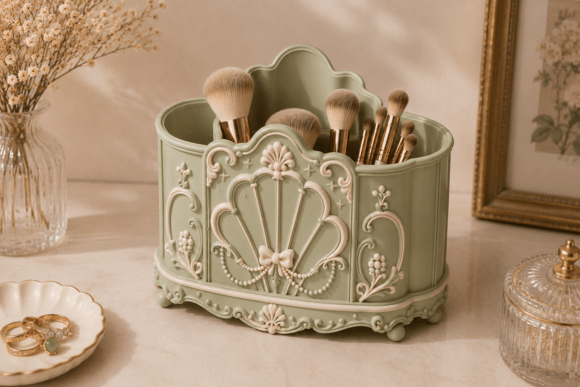
Makeup Brush Holder STL – Vanity Organization Meets Kawaii Design
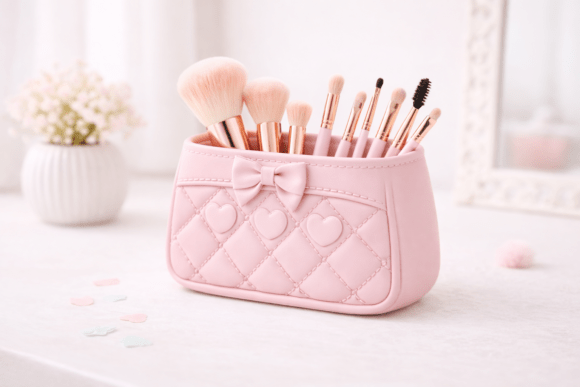
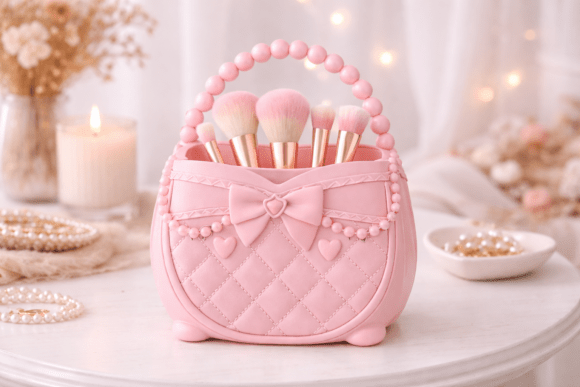
The intersection of functional storage and aesthetic expression has become a defining characteristic of modern workspace design. For beauty enthusiasts, content creators, and 3D printing hobbyists, the search for organization solutions often yields utilitarian results that lack personality. The emergence of the Makeup Brush Holder STL – Vanity Organiz category addresses this gap by merging practical utility with distinct visual appeal. Specifically, designs inspired by chic mini handbags featuring quilted textures, delicate bows, and pearl-style handles represent a shift toward personalized, emotive manufacturing. This approach transforms a simple desk accessory into a statement piece that serves both as a storage vessel and a decorative element within a feminine or kawaii-inspired environment.
Aesthetic Engineering: Translating Fashion Textiles to 3D Geometry
Creating a makeup brush holder that mimics the softness of fabric requires precise digital sculpting. Unlike standard geometric organizers, a quilted handbag design relies on surface topology to convey its theme. The STL file must encode depth and shadow through modeled relief rather than texture mapping, as most consumer 3D printers rely on physical geometry to create visual interest. The quilted pattern serves a dual purpose in this context; aesthetically, it evokes luxury fashion and vintage elegance, while structurally, the undulating surface can increase the rigidity of thin walls, preventing warping during the printing process.
The inclusion of tiny heart details and bow accents introduces high-frequency detail that tests printer resolution. These elements are not merely decorative overlays but are often integrated directly into the mesh to ensure durability. When evaluating a Makeup Brush Holder STL – Vanity Organiz file, one must assess how these delicate features transition into the main body. Smooth transitions prevent stress points where bows or hearts might snap off during post-processing or daily use. The pearl-style handle adds another layer of complexity, requiring either support-free bridging design or strategic orientation to maintain a smooth, spherical appearance without excessive cleanup.
Material Selection and Color Theory for Feminine Workspaces
The visual impact of a kawaii organizer is intrinsically linked to filament choice. While the STL provides the form, the material provides the emotion. Polylactic Acid (PLA) remains the industry standard for this type of decorative print due to its low shrinkage rate and ability to capture fine details like quilted stitching. However, the specific variant of PLA matters significantly. Matte PLA is often superior for textured surfaces like quilting, as it diffuses light and enhances the perception of depth, whereas glossy filaments can sometimes flatten the appearance of intricate reliefs under direct lighting.
Pastel colorways are frequently recommended for this specific handbag-inspired design because they align with the soft, feminine aesthetic central to the kawaii subculture. Colors such as blush pink, lavender, mint, and cream reduce visual noise on a vanity, creating a calming atmosphere essential for self-care routines. Furthermore, lighter colors tend to showcase shadows and highlights more effectively than dark filaments, making the 3D-printed texture pop. For users seeking a more luxurious finish, silk or satin PLA can mimic the sheen of actual handbag leather or satin fabric, elevating the perceived value of the printed object from a plastic cup to a bespoke accessory.
Functional Ergonomics in Decorative Storage
Beyond its visual charm, a makeup brush holder must perform its primary function flawlessly. The internal volume and weight distribution of a handbag-shaped container differ significantly from cylindrical cups. Designers of these STL files must balance the external silhouette with internal usability. The opening diameter is critical; it must be wide enough to accommodate dense kabuki brushes or fan brushes without crowding, yet structured enough to keep thinner eyeliner brushes upright. If the model is too shallow, tall brushes may tip over; if too narrow, retrieval becomes difficult.
Stability is another paramount consideration. A stylized handbag shape may have an irregular footprint compared to a standard cylinder. High-quality Makeup Brush Holder STL – Vanity Organiz models account for this by ensuring a flat, weighted base or integrating the bottom of the "bag" into a stable platform. This prevents the organizer from toppling when heavy items are placed inside or when brushes are removed quickly. Some advanced designs incorporate a hollow chamber at the base specifically intended for adding sand or metal washers, lowering the center of gravity and providing a premium, substantial feel that contrasts with the lightweight nature of plastic.
Optimizing Print Parameters for Complex Topologies
Achieving a clean print for a model with mixed organic and geometric features requires tuning beyond default slicer settings. Layer height plays a decisive role in rendering quilted patterns. While 0.2mm is standard for speed, reducing to 0.12mm or even 0.08mm can dramatically improve the definition of small bows and heart motifs. Variable layer height functionality in modern slicers allows users to print the structural base quickly while slowing down for the detailed upper sections, optimizing total print time without sacrificing quality where it counts.
Wall count and infill density also influence the final tactile experience. Increasing perimeter shells to three or four creates a smoother outer surface and reduces the visibility of infill patterns through the walls, which is crucial for maintaining the illusion of a solid, ceramic-like or fabric-like object. For the pearl handle and bow details, ensuring adequate cooling is vital to prevent drooping. Conversely, the main body benefits from controlled cooling to maintain layer adhesion. Users should experiment with part fan speeds, potentially using lower fan settings for the first few layers of detailed overhangs to allow the plastic to bond before solidifying completely.
Versatility Across User Demographics and Environments
While marketed primarily toward beauty lovers, the application of this design extends across various user groups. For professional makeup artists, a distinctive organizer serves as a branding tool and a conversation starter with clients, signaling attention to detail and stylistic cohesion. In educational settings, such as art schools or design workshops, these models serve as excellent case studies in translating soft-surface modeling concepts into manufacturable geometry. Students learn about tolerance, overhang management, and aesthetic-functional balance through the tangible output of a Makeup Brush Holder STL – Vanity Organiz project.
For small business owners and Etsy sellers, this niche represents a viable product category. The customization potential of 3D printing allows vendors to offer personalized color combinations or scaled versions that mass-produced injection-molded goods cannot match. The "giftability" factor is high; the combination of utility and cuteness makes it an ideal present for birthdays, holidays, or dorm room upgrades. Even for researchers studying human-computer interaction or product design, these objects provide data points on how emotional design influences user attachment and care for everyday objects. The trend suggests that users are more likely to maintain and cherish organizational tools that reflect their identity.
Digital File Integrity and Customization Potential
When acquiring an STL file for this type of project, verifying mesh integrity is a necessary technical step. Non-manifold edges or inverted normals can cause slicing failures, particularly in complex areas like the intersection of a bow and the bag body. Reliable files are watertight and optimized for FDM printing, meaning they avoid impossibly thin geometries that would fail on standard nozzles. Additionally, the scalability of the STL format allows users to adapt the design to their specific needs. A user with a large collection of full-sized brushes might scale the model up by 120%, while someone organizing miniature travel cosmetics might scale it down to 80%.
This adaptability is a core advantage of digital fabrication over traditional retail. Users can modify the file in CAD software to add drainage holes for wet brushes, integrate dividers for separating eye and face tools, or even emboss custom initials onto the quilted surface. Such modifications transform a generic download into a bespoke solution tailored to individual workflows. As the community around vanity organization grows, we see iterative improvements where users share modified versions that address common pain points, fostering a collaborative ecosystem of design refinement centered around shared aesthetic values.
Integrating Printed Organizers into Holistic Desk Setups
The true value of a kawaii makeup brush holder emerges when it is contextualized within a broader desk setup. It acts as an anchor piece that dictates the surrounding decor. Matching accessories, such as phone stands, pen holders, or cable management clips printed in the same pastel palette and texture style, create a cohesive visual language. This uniformity reduces cognitive load and creates a sense of order that purely functional, mismatched storage cannot achieve. Lighting also plays a crucial role; warm-toned LED strips or ring lights enhance the soft curves and pastel hues, reinforcing the dreamy aesthetic described in the design intent.
Furthermore, the maintenance of these printed objects differs from glass or acrylic alternatives. PLA is sensitive to heat and certain chemicals, so cleaning should be done with mild soap and cool water rather than alcohol-based cleaners that could degrade the surface finish. Understanding these care requirements ensures longevity, allowing the organizer to remain a fixture on the vanity for years. By treating the 3D-printed item with the same respect as a traditional decor piece, users validate the medium as a legitimate avenue for interior styling, bridging the gap between maker culture and mainstream home aesthetics.