Evaluating the Ocean Seashell Makeup Brush Holder for Vanity Organization and Decor
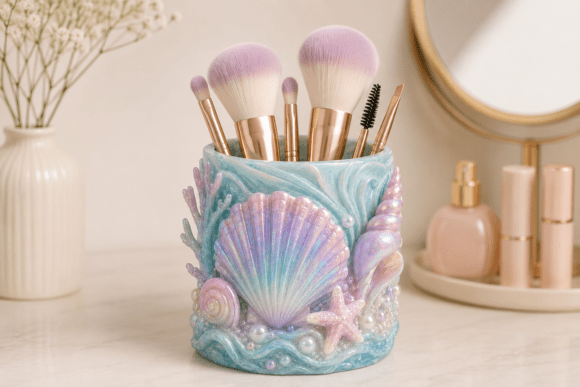
Organizing a vanity or workspace often requires balancing strict functionality with personal aesthetic preferences. The Ocean Seashell Makeup Brush Holder represents a specific niche in desk organization: functional storage that doubles as thematic decor. Unlike standard cylindrical cups or minimalist acrylic organizers, this design integrates sculpted seashells, starfish details, coral textures, and flowing wave elements into a single cohesive unit. For individuals researching 3D printable organization solutions, understanding the distinct characteristics of this fantasy-inspired organizer is essential for determining if it aligns with both practical storage needs and long-term decorative goals.
This STL file is designed primarily for decorative use and organization, serving as a vessel for makeup brushes, pens, art tools, or small accessories. However, because it is a digital asset intended for additive manufacturing, the evaluation process differs significantly from purchasing a finished ceramic or glass product. Prospective users must consider printability, post-processing requirements, and spatial efficiency alongside visual appeal. This analysis explores where this ocean-themed holder fits within the broader landscape of vanity organization and when alternative solutions might be more appropriate.
Distinguishing Features Against Standard Organizers
When comparing the Ocean Seashell Makeup Brush Holder to conventional market options, the primary differentiator is surface complexity. Standard brush holders typically prioritize smooth interiors for easy cleaning and uniform exteriors for mass production. In contrast, this design leverages the capabilities of FDM (Fused Deposition Modeling) printing to create organic, irregular geometries that would be cost-prohibitive in traditional manufacturing.
The inclusion of coral textures and layered wave elements provides tactile interest and visual depth that flat-surfaced alternatives lack. This makes it particularly suitable for open shelving or visible vanity setups where the container itself contributes to the room's theme. However, this complexity introduces tradeoffs. While a smooth glass cup can be wiped clean in seconds, the intricate crevices of a sculpted seashell design may trap dust or powder residue. Users prioritizing sterile hygiene over aesthetics may find simpler designs superior, whereas those curating a coastal or mermaid-inspired space will value the artistic integration this model provides.
Spatial Efficiency and Capacity Considerations
Functionality in brush storage is dictated by interior volume and stability. Fantasy-inspired organizers often sacrifice internal capacity for external sculpture. When evaluating this STL, it is necessary to verify the internal dimensions against your specific tool collection. A standard round brush cup maximizes volume relative to its footprint. An organically shaped shell holder may have uneven interior walls or tapered bases that reduce usable space for thick-handled brushes or dense brush sets.
Stability is another critical factor. The flowing wave elements and asymmetrical shell shapes create a unique silhouette, but they also alter the center of gravity. If you own heavy, professional-grade makeup brushes or plan to use the holder for metal pens and tools, ensure the base design is weighted or broad enough to prevent tipping. For lighter items like eyeliner pencils or slim detailing brushes, the organic shape is generally sufficient. Comparing the base footprint of this STL against your available vanity surface area is a recommended step before committing to the print.
Customization and Color Implementation Strategies
A significant advantage of choosing an STL file over a retail product is the ability to customize the finish. This Ocean Seashell Makeup Brush Holder is provided as a single-color file, which influences how users approach coloration. Understanding the available methods helps determine if this project matches your current equipment and skill level.
- Slicer-Based Color Painting: Software like Bambu Studio or PrusaSlicer allows users to paint color regions directly onto the 3D model. This is ideal for creating multi-colored shells and coral without assembly. It requires precise masking and works best with AMS/MMU systems for automatic filament swapping.
- Manual Filament Swaps: For printers without multi-material units, users can pause the print at specific heights to change filament colors. This method creates horizontal color bands rather than detailed regional coloring, resulting in a more abstract, layered ocean effect.
- Post-Processing and Hand Painting: Printing in a neutral base color (white or grey) and hand-painting afterward offers the highest level of detail. This approach transforms the print into a resin-style fantasy decor piece but requires artistic skill and additional time for priming and sealing.
- Material Selection: Using silk, gradient, or dual-tone filaments can achieve a complex ocean aesthetic without any painting. These materials shift color based on light angle and layer height, naturally highlighting the coral and wave textures embedded in the STL.
Readers should assess their willingness to engage in post-processing. If the goal is immediate utility with zero finishing work, a pre-colored retail item may be preferable. If the value lies in the creative process and achieving a bespoke look, this STL offers flexibility that mass-produced items cannot match.
Print Optimization for Detailed Textures
The detailed surface textures of this ocean-themed holder require specific printing considerations to avoid quality issues. High-detail organic models are sensitive to layer height and cooling settings. Evaluating your printer’s capability is part of the decision-making process. Lower layer heights (0.12mm to 0.16mm) are typically necessary to capture fine coral patterns and smooth wave transitions. Standard 0.2mm layers may result in visible stepping that detracts from the "resin-style" appearance.
Support structures are another consideration. Overhanging shell edges and starfish details may require supports that leave marks on visible surfaces. Users should evaluate whether they can orient the model to minimize support contact on the front-facing decorative elements. Tree supports or organic supports are often recommended for this type of geometry to reduce scarring. If your printer struggles with steep overhangs or you wish to avoid post-processing support removal entirely, this specific design might present challenges compared to simpler, self-supporting geometric holders.
Best-Fit Scenarios and Decision Factors
Determining whether the Ocean Seashell Makeup Brush Holder is the right choice depends on intersecting user intent with technical constraints. This design excels in specific contexts while falling short in others.
Ideal Use Cases:
- Thematic Cohesion: Best suited for bathrooms, bedrooms, or studios already featuring coastal, mermaid, or fantasy aesthetics. It acts as an anchor piece for these themes.
- Gift Creation: Excellent for personalized gifts where the maker wants to demonstrate effort and customization through unique color schemes or hand-painting.
- Display-First Storage: Appropriate for users who view their tools as part of the decor and do not mind slightly reduced accessibility for the sake of visual impact.
- Creative Projects: Serves as a canvas for painters and finishers looking to practice weathering, dry brushing, or pearlescent effects on a textured surface.
When to Consider Alternatives:
- High-Traffic Professional Use: For working makeup artists requiring rapid access and frequent sanitization, smooth-walled, dishwasher-safe containers are more practical.
- Minimalist Environments: The ornate nature of the design clashes with industrial, brutalist, or strict minimalist decor styles.
- Limited Print Volume: If your printer has a small build plate, verify the STL dimensions. Organic shapes often have wider footprints than expected due to their asymmetrical bases.
- Zero-Tolerance for Texture: Users who dislike dust accumulation in crevices should opt for sealed, glazed ceramics or polished acrylics.
Evaluating Long-Term Utility
Finally, consider the longevity of PLA or PETG prints in bathroom environments. Humidity and temperature fluctuations can affect 3D printed plastics over time. While this Ocean Seashell Makeup Brush Holder is optimized for display, users placing it in high-humidity areas should consider material selection carefully. PETG or ASA may offer better moisture resistance than standard PLA. Additionally, UV exposure from direct sunlight can cause fading in some filaments, which is relevant for window-facing vanities.
By weighing these factors—texture maintenance, print complexity, customization effort, and environmental suitability—users can make an informed decision. This STL offers a unique intersection of art and utility for those willing to engage with the fabrication process, distinguishing it from passive consumer goods while demanding a higher level of involvement to achieve optimal results.